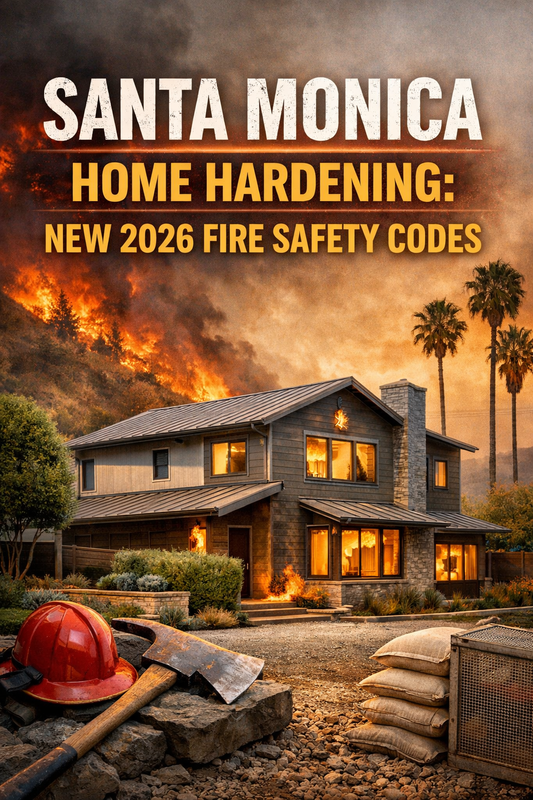
Living in Santa Monica provides a distinct mix of coastal appeal and mountain proximity, yet this geographical deluxe includes a particular duty relating to environmental security. As we relocate with 2026, the discussion around residential building and construction has shifted dramatically towards durability. The local landscape, defined by the completely dry Santa Ana winds and the thick plants of the close-by canyons, needs an aggressive method to building defense. Recent updates to security standards currently stress a concept known as home solidifying, which concentrates on making the physical structure of a house much less prone to ignition from flying cinders. These cinders can commonly travel over a mile from the front lines of a fire, making every home in the area a potential target no matter its straight distance to brush.
Recognizing the Change in 2026 Residential Criteria
The current updates to the fire codes represent a comprehensive effort to bridge the gap between standard building methods and contemporary environmental needs. For house owners in Santa Monica, these adjustments are not just pointers yet are coming to be incorporated into the allowing procedure for new builds and significant restorations. One of the key concentrates is the establishment of what professionals call Area Absolutely no. This is a cinder resistant location that extends five feet from the actual edge of your house. In the past, numerous locals preferred rich landscape design right approximately their foundation, yet the new 2026 requirements prioritize noncombustible products like gravel, stone, or pavers in this prompt boundary. By getting rid of organic mulch and woody plants from this 5 foot buffer, you dramatically decrease the opportunity of a ground fire getting to the exterior siding or vents of your home.
The Relevance of Material Selection for Exterior Surfaces
When it pertains to the actual shell of your house, the 2026 codes are very particular concerning the sorts of products that supply the highest level of defense. Many older homes in the location feature wood siding or shingles which, while aesthetically pleasing, offer really little resistance to intense heat. The approach building fire resistant homes includes making use of fiber concrete home siding, specialized stucco, or stonework. These materials do not simply decrease the spread of fires; they avoid the exterior wall surfaces from firing up to begin with. The goal is to produce a constant fireproof barrier from the foundation right approximately the roofline. This change is particularly vital for homes that rest on the side of the Santa Monica Hills where the surface can channel warmth and wind straight towards residential streets.
Enhancing one of the most Susceptible Access Points
Vents and windows are often the weakest links in a home's protection system. During a wind driven event, coal are pushed into attic spaces with typical vents, where they can stir up insulation and architectural beam of lights from the inside out. The new 2026 policies need the installation of specialized coal immune vents that feature a much finer mesh or internal baffles developed to obstruct little stimulates while still permitting appropriate airflow. Likewise, home window requirements have actually been updated to mandate double paned tempered glass. Tempered glass is considerably extra resistant to the thermal shock caused by intense convected heat. If a standard window splits or shatters, it leaves the inside of the home completely subjected, however tempered glass remains intact a lot longer, providing a critical home window of safety and security for the framework.
Lessons from Regional Recovery Efforts
Taking a look at exactly how various other neighboring communities have actually handled current environmental difficulties provides a clear roadmap for Santa Monica homeowners. For example, the continuous Palisades fire rebuilding procedure has actually highlighted the efficiency of these contemporary solidifying techniques. Houses that were built or retrofitted with fireproof eaves and boxed-in soffits revealed a much greater survival rate compared to those with typical open rafter building and construction. When eaves are boxed in, it stops hot gases and coal from getting trapped beneath the roofing system overhang. This easy architectural shift is currently a trademark of liable construction in the Westside area. It reflects a growing understanding that structure for appeal have to go hand in hand with structure for long life and safety in the California climate.
Enhancing Roofing System Stability and Rain Gutter Security
The roofing system is the biggest surface area on any home and is the most likely location for ashes to land and gather. The 2026 codes purely implement the use of Class A rated roof products such as slate, floor tile, or excellent quality asphalt composition tiles. Nevertheless, the product itself is only part of the equation. Home owners need to additionally make sure that the voids between the roofing system deck and the covering are sealed to stop embers from gliding beneath the ceramic tiles. Gutters are another location of problem, as they frequently gather dry leaves and debris that function as kindling. Setting up fireproof metal gutter guards is now extremely recommended to keep these channels clear. When a fire is nearby, a tidy gutter system ensures that a roaming spark does not develop into a local fire right at the edge of your roofline.
The Role of Professional Competence in Modern Building
Navigating these new guidelines can be complex, specifically when attempting to stabilize modern-day appearances with rigorous safety and security conformity. Many citizens find that partnering with a luxury home building company is one of the most reliable way to guarantee their residential property meets every 2026 requirement without giving up the luxury style they expect. Professional building contractors who concentrate on the Santa Monica and Westside markets are well-versed in the subtleties of the regional community codes and the particular obstacles positioned by the coastal setting. They can integrate fire resistant features into the initial design phase, such as choosing steel mounted home windows or rock outside accents that look beautiful while serving an important protective feature. This know-how is indispensable when dealing with the intricate allowing and examination processes needed for seaside construction today.
Safeguarding Device Frameworks and Boundary Fencing
The new safety requirements also expand beyond the main house to include decks, fencings, and sheds. Traditional wood fencings frequently act as a fuse, leading a fire directly from the border of a property to the main framework. To reduce this risk, the 2026 codes recommend that the first five to eight feet of any fence affixed to a home needs to be made from noncombustible products like steel or masonry. Decks are also being looked at, with a press toward utilizing ignition resistant composite products or hefty hardwood that is less most likely to ignite from below. Confining the space under a deck with fine steel mesh can prevent the accumulation of flammable debris and ashes, even more setting the building against a moving fire front.
Future Proofing Your Santa Monica Financial Investment
Investing in these upgrades is not almost complying with the regulation; it has to do with future proofing your home versus the altering environment and the evolving insurance landscape. Several insurance coverage suppliers are currently considering home hardening steps as a prerequisite for protection or find more as a method to determine costs rates. By executing these 2026 fire safety codes currently, you are essentially securing the long term worth of your Santa Monica real estate. The peace of mind that features understanding your home is constructed to the highest feasible criterion of durability is a significant advantage in an area where environmental awareness becomes part of day-to-day life. These proactive steps make sure that your residential property continues to be a safe haven for years ahead.
We welcome you to follow our blog site and return routinely for future updates on neighborhood building trends and safety and security policies in the Santa Monica area. Would you like me to create a recap of the specific 2026 product demands for various home areas pointed out in the post?